











Art.Nr. 23885 The
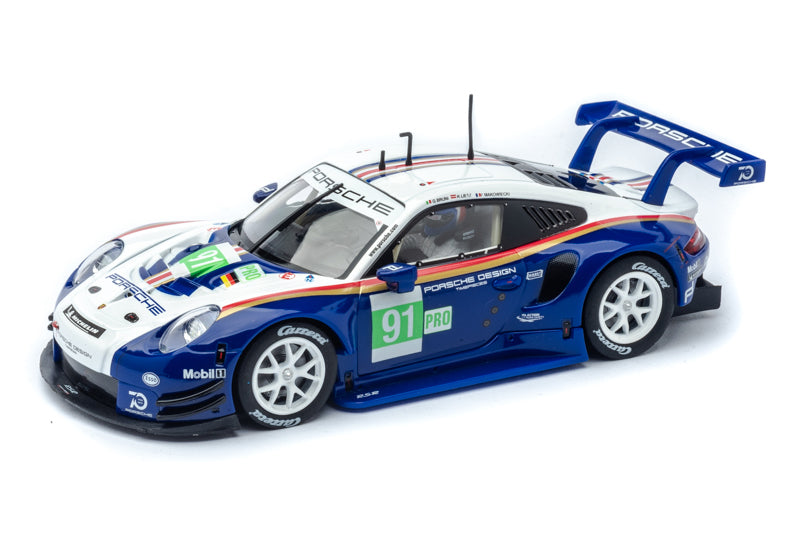
Rothmans cigarette brand livery became synonymous with many Porsche factory cars in the 1980s. Whether it was a 911 or the later Porsche 959 in international rallies, or the 956 and 962 models in the former Group C category at international endurance races, Porsche’s image at that time was largely defined by the Rothmans design.
Porsche vehicles with the Rothmans livery won at Le Mans in 1982, 1983, 1986, and 1987. Jacky Ickx, Stefan Bellof, and Derek Bell secured world championship titles with this sponsor livery.
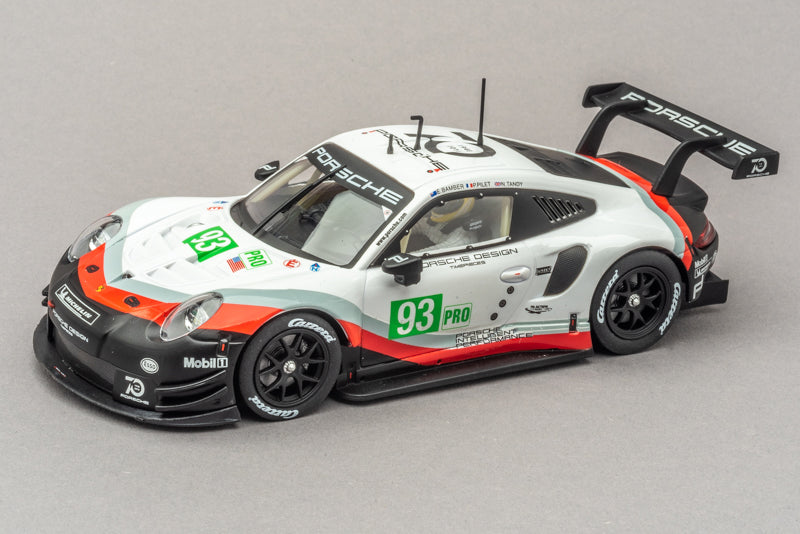
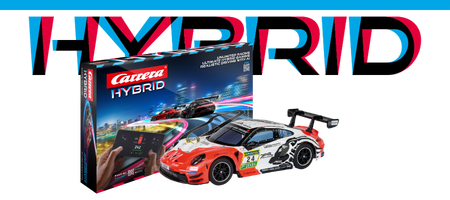
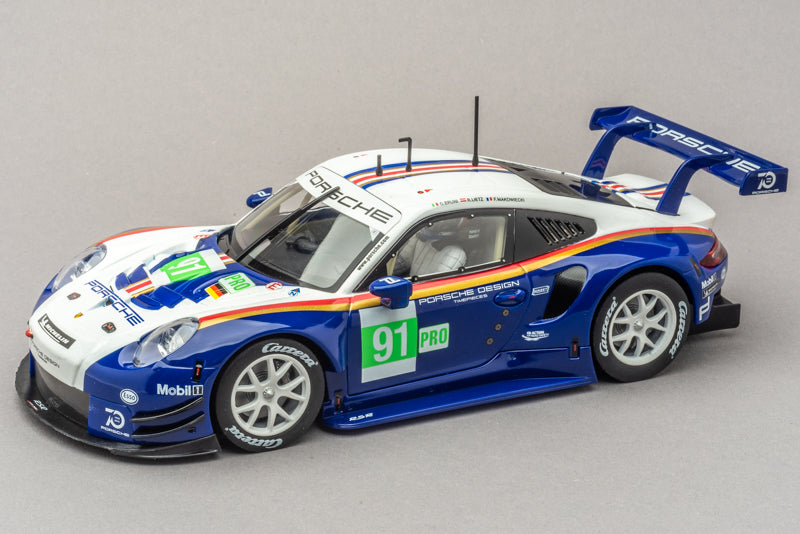
Even though the sponsor’s name is no longer visible on the car today, the design is easily recognizable and brings back memories of many great cars. So it’s no surprise that Porsche released this design to mark the “70 Years of Porsche Sports Cars” anniversary and sent it to Le Mans in 2018.
Thanks to the paint scheme featuring a wide white center section and dark blue side skirts, the Rothmann’s Porsche appears sleeker than the “Sau” version. Ultimately, of course, it’s just as wide and still fits comfortably on the 124-series track alongside another vehicle of that width
Its performance is on par with the other wide-body GT vehicles in the 124 series
The paint job is clean in both craftsmanship and color. The prototypical decals are crisp and sharply defined. The visible driver figure is painted to match the original and is equipped with a HANS system, as seen on the prototype.
The axles are in good condition and run smoothly. The tires have sufficient grip, but should be lightly broken in on the track to slightly round off the edges.
Demagnetized and with slightly broken-in tires, the new 911 is a real blast on the track... I felt right at home. The car runs smoothly and is easy to control even in tight corners. The headlights and brake lights are quite bright and highly visible when driving at night.
The only place where the new 911 isn’t quite as sturdy is at the front; in the center, there’s a printed plastic part serving as a “ventilation grille”—I hope it will be available as a replacement part—otherwise, I’d glue a metal grille in there myself, at the latest once it breaks.
I’m looking forward to more versions of the new Porsche—there’s already plenty to choose from.
JoergW