




















Review by CoMod martinmm of the Carrera Evolution '32 Hot Rod
(27268)
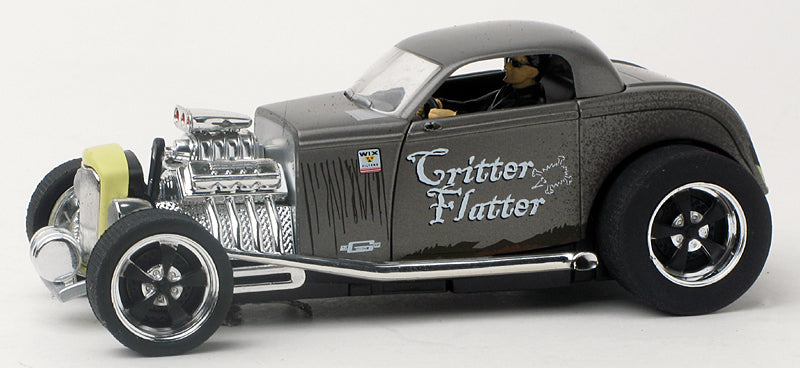
Due to its understated color scheme, the vehicle makes a rather subdued visual impression— z.B. but it impresses with high-quality details such as . flawlessly clean printing, a dirt effect over the rear wheels, two-tone rims, and the intricate design of the dashboard.
Workmanship:
On the test model, the chassis is slightly warped, causing one front wheel to hover slightly off the ground. This has a slightly negative effect on braking and acceleration—the rear of the vehicle drifts slightly to the side
.Technical Specs: Due to its design, the center keel is positioned far back and about 1–2 mm too high. At 92 g (without magnet), it is relatively light. The front axle is clipped in from the rear, which means it sometimes gets jammed upon impact with the guardrail, but on the other hand, this prevents the axle from bending.
Handling: Whether with the rear magnets removed or completely without any additional magnets, the '32 Hot Rod handles very smoothly and in a controlled manner. Without the center magnet, the car is more prone to losing traction because it is very light in the front. The large rear wheels increase the gear ratio—this slightly reduces acceleration and braking performance, but given its light weight, this isn’t too much of a drawback on home tracks. On large tracks, however, the vehicle achieves a respectable top speed precisely because of the long gear ratio, though this requires a long braking distance.
Conclusion
: With the center magnet installed, the ’32 Hot Rod can be driven swiftly and with control through both tight turns and with elegant drifts around wide curves. The car offers a visually appealing alternative to fully-sponsored race cars. Plenty of driving fun included.
CoMod
martinmm-------------------------------------------------------------
--------Review by CoMod lotus ofCarrera Evolution the '32 Hot Rod
(27268)
For a few years nowCarrera
, Hot Rods has been part of the lineup. The term “Hot Rod” refers to specially tuned older cars. Literally translated, the term means “hot connecting rod,” a name these cars have borne from the 1940s to the present day. Originally, old, inexpensive cars were used to build hot rods; their weight was reduced and a significantly more powerful engine was installed.
In the 1940s, soldiers returning from World War II, as well as better-off young people, found an inexpensive way to participate in drag racing. Therefore, the first hot rods, or whose owners are considered pioneers of drag racing. Hot rodding still constitutes a kind of automotive subculture, though it has long since broken away from the lifestyle that once went hand in hand with it (especially that of the 1950s). Nevertheless, the image of the hot rodder still carries a certain air of rebellion.
The classic bases for hot rods were—and still are—all the small cars available at the time, such as Ford’s Model T and Model A, with the most popular models likely dating from 1932 and 1934. The U.S. customizing scene encompasses a wide variety of categories, which differ from one another based on clearly defined style rules (particularly with regard to the body styles and models used). Vehicles tuned in this style up through the 1949 model year are referred to as hot rods.
We have such a model from 1932 here in 1:32 scale. The 1932 Ford isn’t a typical hot rod; rather, it’s meant to represent an older, somewhat worn-out example of its kind, as the name “Still High Performance” suggests.
I really like this Ford, though I’ve always had a soft spot for vehicles with a worn-out look. The paint job is cleanly executed, and the mud splatters look realistic. The overall look is very cohesive and doesn’t come across as toy-like. With the wide rims and tires, the whole car looks very beefy, and the exposed chrome engine and side pipes complement this look very well. Only the yellow radiator grille looks a bit odd, but if you don’t like it, you can always repaint it… ;-) And to this day, I still don’t know what that chrome barrel in front of the radiator is supposed to mean.
Now let’s talk about build quality:Everything is very well made; only the side pipes are mounted a bit loosely. The body can be quickly unscrewed from the base plate; incidentally, the screws at the rear are hidden behind the chrome trim, which is simply snapped on. Due to the model’s design, space inside the chassis is very tight; when assembling, be careful not to pinch any wires. The entire car weighs 99 grams. This vehicle also features the now-familiar separate rear axle unit. Loosen one screw, and you can remove the entire assembly for maintenance. The brass-bearing rear axle can then be easily snapped out and replaced if necessary.
So how does it drive?Smoothly! Thanks to the strong magnets, it’s hard to throw it off course, though if you approach tight turns too fast, it tends to tip over—though that might also be due to the tester, who is admittedly not among Germany’s best drivers. Joking aside, the car handles really well—though it’s a bit more challenging to drive once the magnets are removed. Thanks to its wide track, it handles very well. The Ford is fun to drive—a car that's equally suited for beginners and experienced drivers.
CoMod Lotus
(27268)
Due to its understated color scheme, the vehicle makes a rather subdued visual impression— z.B. but it impresses with high-quality details such as . flawlessly clean printing, a dirt effect over the rear wheels, two-tone rims, and the intricate design of the dashboard.
Workmanship:
On the test model, the chassis is slightly warped, causing one front wheel to hover slightly off the ground. This has a slightly negative effect on braking and acceleration—the rear of the vehicle drifts slightly to the side
.Technical Specs: Due to its design, the center keel is positioned far back and about 1–2 mm too high. At 92 g (without magnet), it is relatively light. The front axle is clipped in from the rear, which means it sometimes gets jammed upon impact with the guardrail, but on the other hand, this prevents the axle from bending.
Handling: Whether with the rear magnets removed or completely without any additional magnets, the '32 Hot Rod handles very smoothly and in a controlled manner. Without the center magnet, the car is more prone to losing traction because it is very light in the front. The large rear wheels increase the gear ratio—this slightly reduces acceleration and braking performance, but given its light weight, this isn’t too much of a drawback on home tracks. On large tracks, however, the vehicle achieves a respectable top speed precisely because of the long gear ratio, though this requires a long braking distance.
Conclusion
: With the center magnet installed, the ’32 Hot Rod can be driven swiftly and with control through both tight turns and with elegant drifts around wide curves. The car offers a visually appealing alternative to fully-sponsored race cars. Plenty of driving fun included.
CoMod
martinmm-------------------------------------------------------------
--------Review by CoMod lotus of
(27268)
For a few years now
In the 1940s, soldiers returning from World War II, as well as better-off young people, found an inexpensive way to participate in drag racing. Therefore, the first hot rods, or whose owners are considered pioneers of drag racing. Hot rodding still constitutes a kind of automotive subculture, though it has long since broken away from the lifestyle that once went hand in hand with it (especially that of the 1950s). Nevertheless, the image of the hot rodder still carries a certain air of rebellion.
The classic bases for hot rods were—and still are—all the small cars available at the time, such as Ford’s Model T and Model A, with the most popular models likely dating from 1932 and 1934. The U.S. customizing scene encompasses a wide variety of categories, which differ from one another based on clearly defined style rules (particularly with regard to the body styles and models used). Vehicles tuned in this style up through the 1949 model year are referred to as hot rods.
We have such a model from 1932 here in 1:32 scale. The 1932 Ford isn’t a typical hot rod; rather, it’s meant to represent an older, somewhat worn-out example of its kind, as the name “Still High Performance” suggests.
I really like this Ford, though I’ve always had a soft spot for vehicles with a worn-out look. The paint job is cleanly executed, and the mud splatters look realistic. The overall look is very cohesive and doesn’t come across as toy-like. With the wide rims and tires, the whole car looks very beefy, and the exposed chrome engine and side pipes complement this look very well. Only the yellow radiator grille looks a bit odd, but if you don’t like it, you can always repaint it… ;-) And to this day, I still don’t know what that chrome barrel in front of the radiator is supposed to mean.
Now let’s talk about build quality:Everything is very well made; only the side pipes are mounted a bit loosely. The body can be quickly unscrewed from the base plate; incidentally, the screws at the rear are hidden behind the chrome trim, which is simply snapped on. Due to the model’s design, space inside the chassis is very tight; when assembling, be careful not to pinch any wires. The entire car weighs 99 grams. This vehicle also features the now-familiar separate rear axle unit. Loosen one screw, and you can remove the entire assembly for maintenance. The brass-bearing rear axle can then be easily snapped out and replaced if necessary.
So how does it drive?Smoothly! Thanks to the strong magnets, it’s hard to throw it off course, though if you approach tight turns too fast, it tends to tip over—though that might also be due to the tester, who is admittedly not among Germany’s best drivers. Joking aside, the car handles really well—though it’s a bit more challenging to drive once the magnets are removed. Thanks to its wide track, it handles very well. The Ford is fun to drive—a car that's equally suited for beginners and experienced drivers.
CoMod Lotus