













" Item No. 30676 The
successor to the Aston Martin DBR(S)9, which has been used in racing since 2006 (certainly
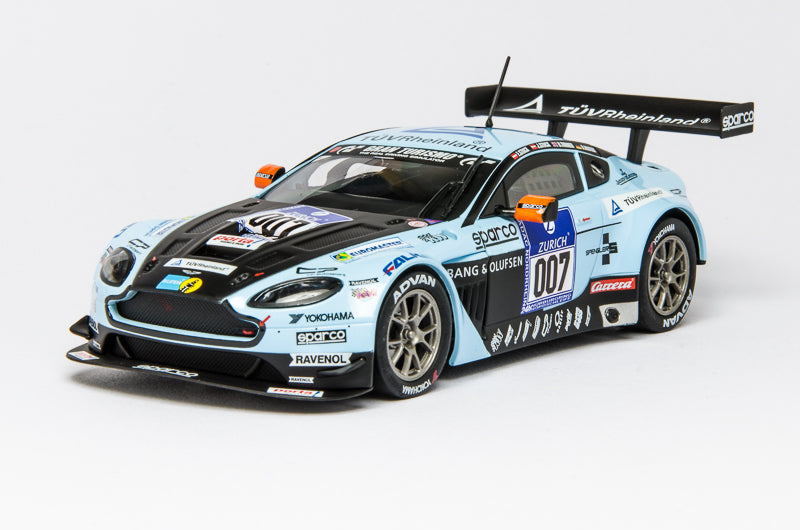
This model, featuring the familiar yellow-and-blue Bilstein design, is the result of a technical collaboration between the automaker Aston Martin and the suspension specialist Bilstein. Competitions in the German VLN series—with a particular focus on the 24 Hours of the Nürburgring—proved to be a solid start for the V12 Vantage’s return to racing. In 2013, it managed to secure 10th place overall in the 24-hour race. This
Appearance: The yellow-and-blue color scheme stands
Technology: Basically all familiar components, even though the vehicle itself is new.
The headlights are white, bright enough, and barely shine inward. The taillights, which appear blue, are actually red. The brake light, in particular, is highly visible. The tires provide good grip. True to the prototype, the tires are quite thin, so skidding should be done with caution. Maybe there will be matching Orthmann parts or something similar for this car—it certainly deserves them.
Workmanship: As for the paint job, there are minor—and I mean minor—imperfections and an annoying chip on the left C-pillar. All other components, such as decals and technical parts, are flawless and neatly assembled. One thing I would have liked to see changed is the antenna. If it were made of a more flexible material, you could leave it on without worry during a race; as it is, the antenna—which sticks out slightly toward the rear—is very vulnerable.
Handling: At 102 grams, the car is a bit heavy, but it has a good balance of wheelbase, length, and width and can
Bottom line: Finally, a “new” manufacturer is back on the
CoMod Jörg