

















Art.Nr. 30944"
Richard Brickhouse and His Only NASCAR Victory
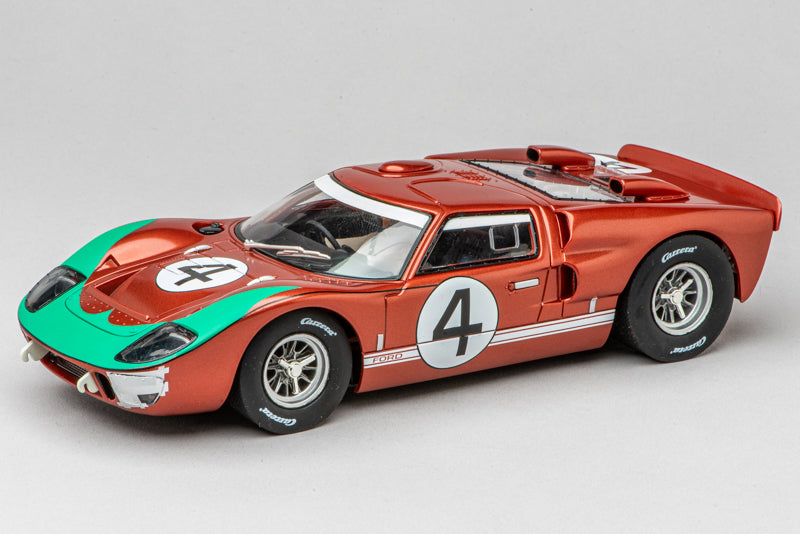
The Plymouth Superbird has long been a classic in the CARRERA lineup. The first NASCAR models were released as early as 2003.
However, the car still sells very well in the home of oval-track racing, which is why CARRERA has once again added a few models to its new product lineup after a hiatus of a few years.
The red-and-gold model is a Plymouth Superbird based on a real car that raced in the 1979 Daytona 500. The driver was Richard Brickhouse.
But who was Richard? I’ve delved a bit into his story for this club report, since the story behind his only NASCAR victory is more interesting than the car he drove the year after his win.
Richard Brickhouse was born on October 27, 1939, in Rocky Point, North Carolina. He competed in just 35 NASCAR races, recording 13 top-ten finishes, including one victory. He is best known for winning the first Talladega 500, which took place on September 14, 1969. Today, Talladega Superspeedway is the largest track on the NASCAR racing calendar, hosting two races each year.
Brickhouse was a “second-tier” driver who was only able to win the 1969 race because the stars of the sport at the time did not compete:
The track’s size and 33-degree banking, combined with hot temperatures and an abrasive surface, often led to tire failures in practice, frequently after just a few laps. The Professional Drivers Association (PDA), led by Richard Petty, asked Bill France Sr. (Big Bill), the legendary founder and manager of the NASCAR series, to postpone the race until
Led by “The King” Richard Petty (who had shredded three of the four Firestones on his car during qualifying), the majority of the top drivers simply went on strike! The boycott did not sit well with Big Bill, who was determined to hold the race no matter what. With only one top driver (Bobby Isaac)—but mainly with second-tier drivers like the eventual winner Richard Brickhouse—the race ultimately went ahead after all. Brickhouse, a relative newcomer to the scene, even resigned from the PDA so he could race. It was his only NASCAR victory; in total, he competed in just 38 more NASCAR races during his career, which spanned from 1968 until his retirement in 1982. Incidentally, he held the Guinness World Record for the fastest time on a closed circuit for many years.
Incidentally, the 1969 drivers’ boycott was blamed for the downfall of the Professional Drivers Association (PDA), which had been founded only shortly before under the leadership of Richard Petty—an organization through which the drivers had hoped to achieve the following improvements: Higher prize money, better insurance coverage, the introduction of a pension fund for drivers, and washing facilities in the paddock!
CoMod Lotus