

















No.: 20030706
<<
Technical Specifications:
Weight (complete car with magnets): 71
grams Weight (body): 16
gramsLength including spoiler: 155
mmWheelbase: 97
mmTrack width (front axle): 54
mmTrack width (rear axle): 52
mmOther: narrow center magnet, new digital decoder ItemNo. 26744Body/Appearance
:
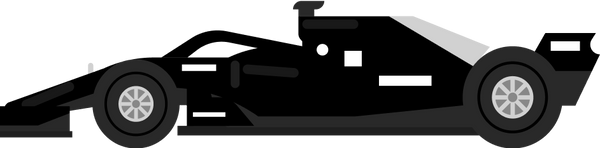
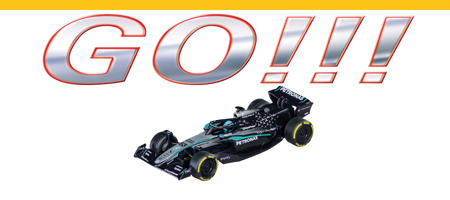
A racing series featuring all-electric Formula cars—it was only natural to bring these to the racetrack in scale form. For the third model, the team chose Nick Heidfeld’s—now former—company car. This incident gained media attention because Nick, Heidfeld, and Nicolas Prost were involved in a spectacular crash right at the season opener in Beijing in 2014. Heidfeld’s car was hurled meters into the air and into a safety fence, but fortunately
, he emerged from the incident without any significant injuries. Black bodywork is always problematic because it’s hard to see against the track, which is also black. However, the red stripes and the checkered pattern on the rear cover provide visual reference points.
On the other two Formula E models, the rims are silver; here, they are black with a thin red border. This gives the model a certain distinctiveness compared to the other two.
Also worth noting are the recess for the transmission in the rear and a side recess on the left below the driver, under which the digital decoder’s LED is located.
The front spoiler is attached as usual; other than that, there are no mirrors or other small parts that could break off or get lost while driving. The rear spoiler extends across nearly the entire width of the car at the bottom and is mounted quite securely.
Chassis/Technology:
With a total weight of just 71 grams, the model is extremely lightweight. It is powered by the narrow, elongated engine familiar from many other formula cars.
Due to the narrow body shape with side pods set far back, a new digital decoder (Part No. 26744) is used here, which will also be available separately for retrofitting analog
Furthermore, the center magnet is significantly narrower than the standard-sized rear magnet.
Handling:
Thanks to its low weight and open-wheel design, the car is a real speed demon—and the motor certainly plays its part. On smaller home tracks, the top speed is practically unattainable. I therefore decided against conducting a test run without magnets or with only some magnets installed; handling would likely pose a very specific challenge in that case. With the top speed reduced via BB/CU, the handling becomes more manageable, but even here, it’s best to leave both magnets in the chassis.
Conclusion:
Formula cars aren’t necessarily among my favorites. However, given the theme and the wide variety of designs offered by the Formula E racing series, it would have been a mistake not to take advantage of this opportunity. The models offer a good balance between visual finesse and robust construction. And if more designs follow in the future, they will be better suited for racing than the similarly constructed F1 cars, in the spirit of equal opportunity.
Best regards,
CoMod Chris
***************************************************************************
Item No.: 20030705
< <
The FIA Formula E Championship has been in existence since September 13, 2014, and is held exclusively on street circuits worldwide. That’s why it came as a big surprise to us in late fall 2014 that the first Formula E cars were set to appear in the 2015 annual program. Although
Electric cars have been around since the invention of the automobile. In the early years, by the way, it wasn’t at all clear which concept would prevail: Gasoline was expensive, while electricity was more readily available. As is well known, the gasoline engine “won out”; even back then, the main problem was the size and weight of the batteries. And when Mercedes unveiled the neon-yellow SLS AMG GTS with four in-wheel motors two years ago, the idea wasn’t really new: Even the Lohner-Porsche at the 1900 World’s Fair had electric motors built into its spoked rims.
However, the Lohner-Porsche isn’t entirely comparable to a modern Formula E race car. The electric Porsche from the turn of the century had a top speed of about 50 km/h and a range of 50 km with its 410-kg lead-acid battery. Formula E cars, on the other hand, are a bit faster and have a slightly longer range: a top speed of 220 km/h and a range of 200 km.
All teams in the 2014–15 Formula E season compete with the same car, the Spark-Renault SRT 01E. The chassis and aerodynamics of the cars are standardized, but modifications to the engine and batteries during the season are permitted. All teams use MICHELIN as their tire supplier, and there are limits on the number of staff per team, cars per team, tire sets per race, and so on. Goal: To ensure a relatively level playing field for all teams and guarantee exciting races.
The Audi Sport Abt team is one of the first-generation teams. Its drivers are Daniel Abt and Lucas di Grassi. In the first race of the season in Beijing, Grassi immediately took the top spot on the podium; the Allgäu team finished the season in third place.
Visually, the electric Audi is one of the most beautiful cars on the grid, and it has been wonderfully and faithfully reproduced as a model.
Best regards,
CoMod
Lotus***************************************************************************
No.: 2003070
<<
200 kW and top speeds of 225 km/h—these are the specs with which Formula E is set to shine starting in its third season. Manufacturer and customer teams will compete in thrilling races on various city circuits around the world.
No charging takes place during the pit stop; the driver jumps into a fully charged vehicle and off they go. A city race is planned for May 21, 2016, in Berlin… almost like a giant slot car track ;-)
The three vehicles released so far by different manufacturers—I’m assuming there
The vehicles are faithfully reproduced; the only omission is the side mirrors—which, in Formula 1, sometimes don’t even make it through the first lap. There’s a noticeable bulge at the rear that doesn’t match the original, but the axle pinion has to go somewhere. The same goes for the small bump on the lower left side of the center spoiler…. This is where the diode for digital operation is located.
The slightly narrower rear end, the shorter wheelbase, the narrower tires, and the center of gravity located directly beneath the driver are the main differences from Formula 1 cars.
Well, almost—the tires aren’t just narrower than those on an F1 car; they’re also grooved and seem to have less grip. This certainly isn’t a major issue for magnet-based operation, but if someone is driving without magnets, they could easily be at a disadvantage. The rear wheels are much better protected on the Formal-E cars, which makes rear-end collisions with other drivers less dramatic.
Best regards,
CoMod joergW